

Tiffany Yu is the founder of Diversability and author of The Anti-Ableist Manifesto, a collection of insights from disability advocates, activists, creatives, and leaders who fight ceaselessly for disability rights and inclusion. Forever shaped by her lived experiences, Yu uses her voice to educate and empower those who are often unseen, while calling for change at a greater level. She considers: what stories do we want to leave behind for the next generation, and what must we do to sustain it?
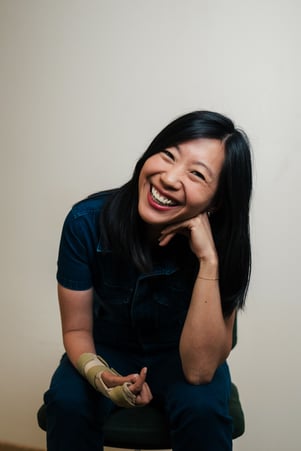 Shiwon Oh: How would you define the word legacy, and what long-lasting societal change would you want to achieve?
Tiffany Yu: Legacy is about creating a ripple effect that continues to make the world more equitable and inclusive long after I’m gone. It’s not about being remembered, but about what endures because of the work we did together. My legacy, I hope, will be a world where disabled people are seen, valued, and celebrated for who we are—not in spite of our disabilities but because of the unique perspectives and innovations we bring. Through my book The Anti-Ableist Manifesto and my company Diversability, I want to leave behind a blueprint for how we can build systems rooted in belonging and collective care, where accessibility and inclusion are the norm, not the exception.
SO: What most inspires you to dismantle biases and educate others through your storytelling? What has been your impact thus far?
TY: As someone who became disabled at nine years old, I often say that nine-year-old Tiffany is the “why” behind my work. I’m building and funding the things I wish had existed when I was younger. Before founding Diversability, I worked in investment banking at Goldman Sachs, which taught me how powerful access, networks, and capital can be—and how few disabled people get to benefit from them. I grew up rarely seeing people like me reflected in media, leadership, or culture, and that absence fueled my desire to share my story and democratize access and opportunity.
Through Diversability, we’ve grown from Georgetown University’s first-ever disability student club into a global community of more than 80,000 disabled leaders and allies, helping our members collectively earn over $130,000. With the release of The Anti-Ableist Manifesto (now in its fourth printing), I’ve seen how stories can shift perspectives, inspire action, and spark new initiatives. My favorite part has been watching our community win, gain respect, and move from shame to pride. The disability community is a cultural force to be reckoned with, and we’re not going anywhere.
SO: Much of our legacy-building involves relationships that uplift us. How did you solidify a network that empowers you?
TY: Working at places like Goldman Sachs, Bloomberg, and REVOLT taught me the importance of networks and mentorship. But I also saw how many of those networks excluded people like me. My network now is built on a simple truth: community is the antidote to isolation. After my accident, I spent years feeling alone in my disability. Founding Diversability became both an act of personal healing and collective building. I surrounded myself with people who understood the power of shared experience—other disabled leaders, advocates, and allies working toward the same vision of equity and belonging.
I also believe deeply in mutual empowerment: celebrating each other’s wins, sharing resources, and making space for one another’s voices. My network isn’t transactional; it’s transformational. Every relationship is rooted in care, authenticity, and the belief that a win for one of us is a win for all of us.
SO: Why is it so important for leaders to share their authentic stories when trying to nurture spaces that challenge the status quo?
TY: Authenticity gives our leadership credibility and heart. When we share our real stories—the failures, the fears, the moments of doubt—we invite others to bring their full selves too. That vulnerability creates psychological safety, which is essential for innovation and inclusion.
As a disability advocate, I’ve learned that storytelling can be both an act of resistance and an act of love. It disrupts stereotypes and challenges ableist ideas about what leadership “should” look like. Just as importantly, it reminds people that leadership can look like them, and that our stories hold power and purpose in the boardroom and beyond.
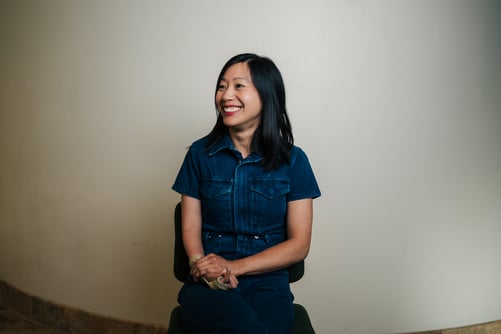
SO: Through your company, published book, and speaking engagements, you make your legacy as an anti-ableist and disability advocate tangible. What are some first steps women can take to drive their own form of cultural transformation?
TY: The Anti-Ableist Manifesto follows a transformative framework called Me, We, Us, which begins with awareness and accountability. Examine the spaces you’re in—your workplace, your community, your personal circles—and ask who’s missing and why. Reflect on how these spaces might inadvertently devalue disabled bodies or minds. Then take action to make them more inclusive, whether by challenging assumptions, advocating for accessibility, or amplifying underestimated voices.
I also encourage women to find community and lead with vulnerability. The things we’ve been taught to hide—our imperfections, our identities, our struggles—are often what connect us to others and drive meaningful change. Cultural transformation rarely starts with grand gestures; it begins with small, consistent acts of courage that collectively rewrite the narrative for the next generation.
Read our full issue here for more insights on organizational transformation.
Book Recs: What’s on our CCWomen To-Be-Read Shelf?
 The Anti-Ableist Manifesto: Smashing Stereotypes, Forging Change, and Building a Disability-Inclusive World
by Tiffany Yu
Author Tiffany Yu starts her book redefining disability as “a health condition of the body and/or mind that impacts the way a person participates in daily activities.” Many of us, no matter how well-intentioned, hold harmful ableist assumptions—and Yu seeks to dismantle them with gentle compassion, firm knowledge, and thought-provoking storytelling. Whether we want to learn more about disability because of a loved one, colleague, or even for self-education, The Anti-Ableist Manifesto promises to guide our learning.