

When we look at US history, we see that advocates have been fighting the gender pay gap since 1944. Earlier attempts garnered few outcomes, but from the 60s to the early 2000s, into our present day, we've been able to achieve parity incrementally.
Pay disparity has unfortunately widened in 2026, with women now earning $0.82 to a man's $1.00. It can be discouraging to see that our momentum has stalled, and that change isn't always linear. Still, fueled by purpose and ambition, leaders like Adeola Ajani remain undeterred in shifting the narrative.
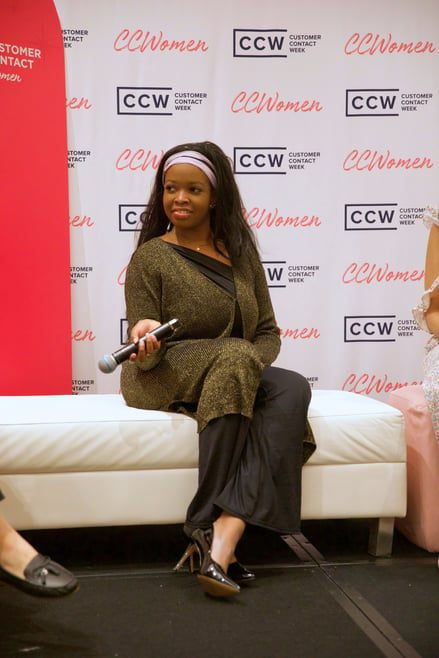
Founder of Fem Equity, a pay advancement platform, Ajani equips women professionals with the knowledge to sharpen their negotiation skills and secure generational wealth. During our latest webinar, she shared her journey and how her organization helps women get the pay they deserve by equipping them with the data, community, and resources to take up space.
 1. Identifying inequity is the prerequisite to action.
Ajani first ideated Fem Equity after experiencing inequity firsthand and recognizing a need for a platform where women could address it. She noted, "[At my workplace], I realized I was being paid 40% less than my male counterpart, and we had the same background and career path."
The difference in their employment process, to her surprise, was his access to a network and a suite of resources that allowed him to advocate for himself. So, taking note of her pay gap, she created a tool that, based on gender, race, ethnicity, occupation, and years of experience, compared her current income with fair market value and calculated what she deserved.
Ajani didn't want to stop there. Starting with interviewing 100 professionals, 90% of whom were women, she went on to collect data from thousands of others who underwent similar struggles—especially women of color and immigrants.
Her first step was recognizing the moment she felt the disparity between herself and her colleague. Her next course of action was to expand her perspective further and brainstorm a solution that would benefit many others.
2. Demanding representation is the bare minimum; maximize your "staying power."
As a BIPOC executive, getting a seat at the table can feel like the light at the end of the tunnel. Ajani believes that it's only the beginning:
"We see many Black, Brown, and Indigenous women leaders quickly getting demoted or fired. We must ensure we don't become complacent. It's not just about getting into our desired roles, it's about staying power. It's about promotional power and seeing people thrive across different industries. "
A measly 29% of women make it into C-suite, a percentage that has remained stagnant since 2024. The path to growth is even steeper for women of color, making it all the more important for businesses to prioritize inclusion, and individuals to pay it forward.
Staying power also doesn't have to look one way. Ajani suggests looking into multiple streams of income and pursuing opportunities like consultancy, intrapreneurship, and entrepreneurship—making women marketable and future-proof, but also using their expertise to guide others in need.
3. Closing the gender gap requires strategic collaboration.
While data anticipates that we'll achieve gender parity in 134 years, Ajani thinks that a commitment to consistent people- and mission-driven collaboration will be key to witnessing change happen in our lifetime.
"Fem Equity was able to scale through its collaborations with organizations like Gender Equality in Tech Cities and American University's Women Entrepreneur Track," said Ajani. "The future lies in strategic partnership."
Like Fem Equity, various campaigns, non-profits, and for-profits remain on the frontlines to uplift underrepresented people groups and demand equal pay, even at a time when diversity and inclusion are currently on the back burner. Like-minded and connected by a mutual vision, they work in tandem to nurture spaces where people—from college graduates to industry titans—can access equal pay.
Despite resistance, and sometimes outright hostility against progress, the tide still rises.
Ajani concludes her session by challenging her audience:
- On the backend, what is your business actually doing to uplift all employees financially?
- What is the impact and benefit of pursuing gender parity?
- Where do you want your work community to be five, ten, or fifteen years down the line?
Trends and much of history are cyclical. With hope and determination, Ajani foresees the pendulum swinging back in favor of underrepresented women—emboldening entire communities to learn how to win together.
Don't miss our next webinar. RSVP now to save your spot!