

Anyone who knows me is familiar with my love for Korea, my motherland and country of origin. I’m excited to see that, thanks to K-pop, literature, and other forms of media, more of the world can take a peek into our small, mighty, and resilient peninsula. But loving your country doesn’t mean you excuse its faults—for there to be change, you must confront the ugliness that festers alongside its points of beauty and strength.
For one, South Korea has the worst gender pay gap among OECD countries. It’s also widely known—as told to me by my mother and other relatives—that women have trouble re-entering the workforce after having children. During a recent conversation I had with a friend currently working in Korea, she shared the societal pressures she faced as a young woman: namely, how her appearance was casually criticized and scrutinized in the office, as if she were merely a piece of furniture in need of repair.
On a more insidious level, South Korean women frequently face harassment and discrimination without having the opportunity to speak up against their perpetrators. The system works against them, draining them of resources before they can see justice served. But hope remains because people continue to fight for a better future, among them Hawon Jung, author of Flowers of Fire.
I first reached out to Jung after coming across her book, which curates several stories from survivors and activists leading our country’s feminist movement. I admittedly know about it at a surface level and from family anecdotes, and always wanted to learn more about why Korea is so deeply steeped in patriarchy, and how women today are changing the narrative—because they are, incrementally.
Jung’s background is nothing short of extraordinary. A journalist and former Seoul correspondent for the AFP news agency, she has covered everything from major South Korean politics to K-pop’s rising popularity. She’s a member of Human Rights Watch's advisory council and was honored by CNN for her advocacy on women’s and LGBTQ+ rights. Flowers of Fire is one of her many achievements, and I’m forever changed after reading it.
Korea has survived centuries of war and occupation, and it still stands with its chin held high. Its women are just as unwavering, and their sacrifices light a familiar fire within me. We call it han (한), a deep sense of grief and anger caused by injustice. I like to think that han is an ancestral reminder that we must never forget our history; our past must reshape our future.
As you read this conversation and gain insight into how gender inequality operates in South Korean corporate culture, I encourage you to reflect on your workplace and your role in transforming it from the inside out, bottom up. Alone, we may be a grain of sand, tossed about by an unforgiving sea. But together, we can create solid land that allows the next generation to walk freely, their footprints a sign of our collective victory.
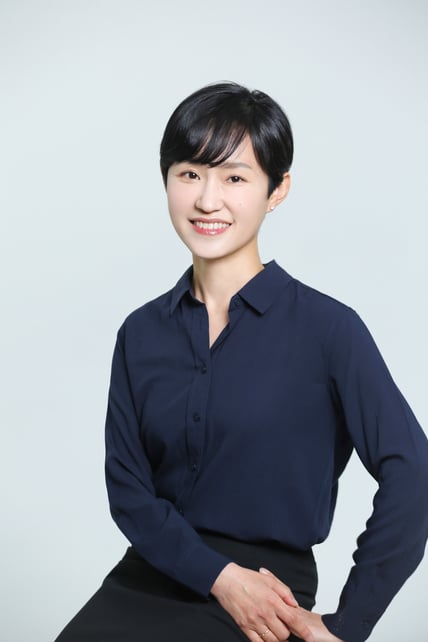
Shiwon Oh: What life and career experiences fed your desire to spotlight Korean women fighting gender inequity?
Hawon Jung: I hadn’t been particularly aware of, nor had I questioned, gender inequality or structural gender injustices in everyday life while growing up. I didn’t think much about why my mother—like many women of her generation—had to quit work once she got married because “it’s just the way it is”; why there were so few women in senior positions in our society, including the newsrooms where I worked; why so many of my female friends were asked questions like “do you have a boyfriend?” or “when are you planning to get married?” during job interviews; or why South Korea has reported the biggest gender pay gap in the industrialized world year after year. I was very much focused on studying hard, getting a job I wanted, and advancing my career. I didn’t think that I had the luxury of questioning or challenging these social norms, professionally or personally.
But the wave of feminist activism that emerged in South Korea in the mid-2010s was an eye-opening experience. It gave countless women and girls in the country the language to define and articulate the vague sense of frustration and anger they had long felt but couldn’t name.
At the time, it was as if the dam had burst: women and girls began to speak out en masse against gender inequality and everyday misogyny. They questioned why, in a technologically advanced country like South Korea, so many women had to fear being secretly filmed on subways, in schools, workplaces, or public toilets by high-tech gadgets and having these “spycam porn” videos shared online; why hateful online slurs promoting violence against women were dismissed as “just the way the internet is”; and why so many women shouldered the lion’s share of household chores—so much so that even those who were the family breadwinners often spent more time on domestic labor than their stay-at-home husbands.
Back then, so many heated discussions on such issues unfolded on the internet, in classrooms, college campuses, and workplaces. These conversations led to numerous street protests, the #MeToo movement that was one of the most robust in the world, petitions for legal and institutional reforms, and other campaigns to shed light on gender inequalities in everyday life that had long been accepted as “just the way things are.”
As a Seoul correspondent for the Agence France-Presse, I had the opportunity to witness and chronicle many of these developments firsthand. Those issues resonated with me not only professionally but also personally—as a woman living in South Korean society and who had experienced many of the same realities being debated at the time.
At the time, issues of gender inequality in South Korea—and the growing efforts to challenge it—were rarely covered by foreign media. Most news coverage about the country was focused on geopolitics with North Korea, technology, the economy, or K-pop. Yet I believed that the issue of gender inequality would have profound impacts on South Korean society, politics, and culture for years to come. That’s why I covered them extensively and ultimately wrote a book about them.
SO: In Flowers of Fire, you provide historical and cultural context to explain Korea’s rampant misogyny. How do you connect the past to the present to illustrate the challenges Korean women face today, and why it’s necessary for them to keep fighting?
HJ: While misogyny is a global problem, it manifests itself differently in different places, shaped by distinct social and cultural contexts. In South Korea’s case, it is closely tied to the country’s history, including its Confucian heritage, the 1950-53 Korean War, decades of army-ruled dictatorship, and the pervasive military culture deeply embedded in family life, schools, workplaces, and other institutions. In such a “militarized” society, the values prized in the military —including aggressive masculinity, unquestioning obedience to authorities, and tolerance for violence—became woven into the very fabric of everyday life, shaping social interactions at every level. In this environment, women were easily sidelined and discriminated against as second-class citizens.
Feminist scholars were among the first to identify this military culture as a root cause of misogyny in South Korea, and actively explored ways to confront it. They understood that the challenges we face today are deeply intertwined with our past -- and that meaningful progress requires a clear understanding of that history.
While the remnants of history cannot be erased overnight, South Korea’s feminist activism has achieved remarkable progress, particularly over the past decade. Thanks to a robust #MeToo movement, many companies and institutions now have far stronger mechanisms to address workplace sexual harassment than before. Strong grassroots campaigns against tech-based sexual abuse—such as spycam porn or deepfake porn—have also driven significant legal reforms, putting South Korea on the forefront of global efforts to address such abuse. These hard-won achievements, made in the face of fierce antifeminist backlash, stands as powerful proof of the need to keep fighting—despite all obstacles.
SO: You’ve interviewed countless women activists advocating for different causes and heard their experiences first-hand. What has been the impact of sharing their stories to the world?
HJ: Like I said earlier, women’s rights activism had not really been a major focus of international conversations about South Korea. And I believe my writing served as a bridge connecting women in South Korea with those outside the country who wanted to hear their stories. Many readers of my book described it as eye-opening and refreshing, saying it introduced them to lesser-known stories of women fighting for equality in the non-Western world.
Journalists, activists, students, artists, and women’s rights advocates outside South Korea often reached out to me, hoping to connect with activists and groups in South Korea. Some wanted to know how they could support the movements I wrote about. Others sought to express solidarity or learn more about some of the unique aspects of South Korea’s feminist activism. One such example was the fight for abortion rights and bodily autonomy: South Korea decriminalized abortion in 2019 after years of campaigns by women’s rights activists, and some women and advocates in the US often reached out, asking about what they could learn from South Korea’s experience.
Another example is the growing number of young South Korean women striving to live free from traditional expectations of women to be a wife, mother, and self-sacrificing family caregiver. More young women—educated and financially independent—see the institution of marriage in South Korea too patriarchal and oppressive for women, and are choosing to live as “bihon (roughly translated as “willfully unmarried).” The number of marriages has plummeted, and so has the number of births (since births out of wedlock remain extremely rare in the country). These trends have sparked debates over how to change the patriarchal norms embedded in the country’s family life.
At the more radical end of this bihon spectrum are followers of the 4B movement, which rejects heterosexual dating, sex, marriage and childbirth altogether. As you may know, the movement gained international attention after Donald Trump’s second presidential victory, when many women in the US embraced it as an act of defiance against tightening abortion access and pervasive toxic masculinity. And the fact that a fringe feminist movement from South Korea resonated with many women in the US underscored the sense of frustration and hopelessness many American women have about the patriarchal force in their society—a key factor that had initially fueled the 4B movement in South Korea.
In this way, I believe my book and writing, alongside the work of a growing number of Seoul-based journalists writing for international media, have helped, to a degree, amplify dialogues between those fighting for gender equality in South Korea and those outside the country. And I hope that the conversations will continue to grow in the years ahead.
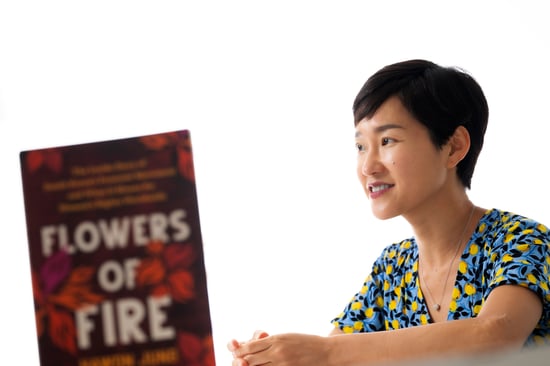 SO: What were some storytelling challenges you faced as a journalist covering feminism, and how did you overcome them?
HJ: As a journalist covering feminism, one of my biggest challenges was earning the trust of my sources—and protecting them from the bullying and harassment that often target women who speak out.
In South Korea, women who openly share their experiences of sexual assault face a storm of online abuse, public shaming, and even threats of criminal punishments. Defamation is a criminal offence punishable by years in jail. Even speaking the truth can still be a crime—if doing so is deemed to have damaged one’s reputation. The result is an environment where only a fraction of those who experience sexual violence in the country seek help from the authorities, and even fewer speak publicly.
At the same time, women who identify themselves as feminists—or are merely perceived as such, particularly young women—are often labelled as “mentally-diseased” and face the risk of bullying, harassment, career setbacks, and even physical violence. In a high-profile case in 2023, a young men’s rights activist physically assaulted a convenience store clerk simply because she had short hair, which he considered as a sign of feminism.
Given these risks, many women, understandably, are reluctant to speak out, which means that their stories are easily buried or forgotten. There is no perfect way to “overcome” these challenges. But I made it a priority to show up consistently, spend time with these women, and earn their trust to make them talk to me. To secure interviews with sexual assault survivors, I often attended their court hearings to understand the full context of their experiences. Survivors open up more when they know a journalist won’t simply speak with them for an hour, publish a story, and then leave them to face the backlash alone.
With many advocates and feminists, I had already built rapport through years of covering street protests, high-profile court cases, and other events. Once I invested the time to build relationships and demonstrate reliability, it became much easier to secure interviews or be introduced to the people I needed to speak with.
SO: What advice would you give to storytellers who want to make a difference, but feel silenced and underrepresented? How can they step into the light and become unapologetically loud about issues they care about?
HJ: I can’t simply tell them to be brave and step forward to share their stories not knowing the risks they would face. But I can talk a bit about the experiences of women in South Korea. Many of them also remained in silence for years, due to fears over all the risks I mentioned earlier. But some of them found others like themselves through feminist organizations, online chat rooms, or social media, or by forming all kinds of communities where they could get together, share their stories, and feel connected.
A sense of solidarity and empowerment emerged from these spaces. Many eventually went on to share their stories with a wider society with the support from these communities. This sense of connection and mutual solidarity played a crucial role in South Korea’s feminist activism and #MeToo movement also fueled the success of many female-centered cultural works, whether literature or TV dramas, over the past decade. I hope that the aspiring storytellers in the marginalized communities elsewhere can also find their own communities where they can grow together and support one another.
Book Recs: What’s on our CCWomen To-Be-Read Shelf?
 Flowers of Fire: The Inside Story of South Korea's Feminist Movement and What It Means for Women' s Rights Worldwide by Hawon Jung
The #MeToo movement took the world by storm. In South Korea, its women activists, survivors, and fighters flooded the streets, refusing to be silenced. Hawon Jung weaves together several stories of women who, despite ongoing threats from those in power and looming financial and societal barriers, move forward to make their voices heard. Flowers of Fire demonstrates the undying strength of Korean women and how their contributions, too, continue to close the gender gap for all of us.